News
CyanLines pop-up project brings burst of colour and nature to Deansgate
7 September 2026
Public and third sector
 Get in touch
News
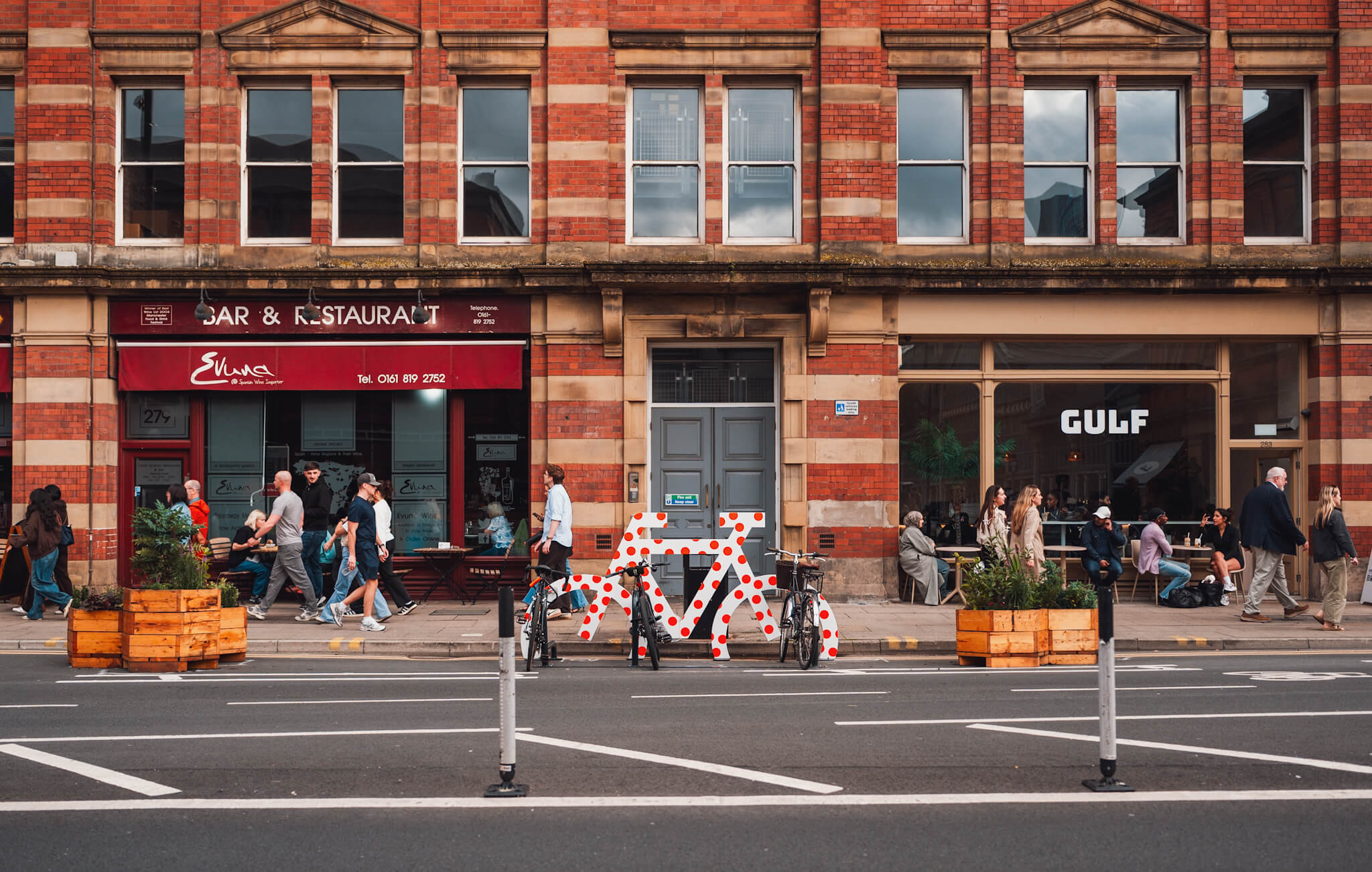
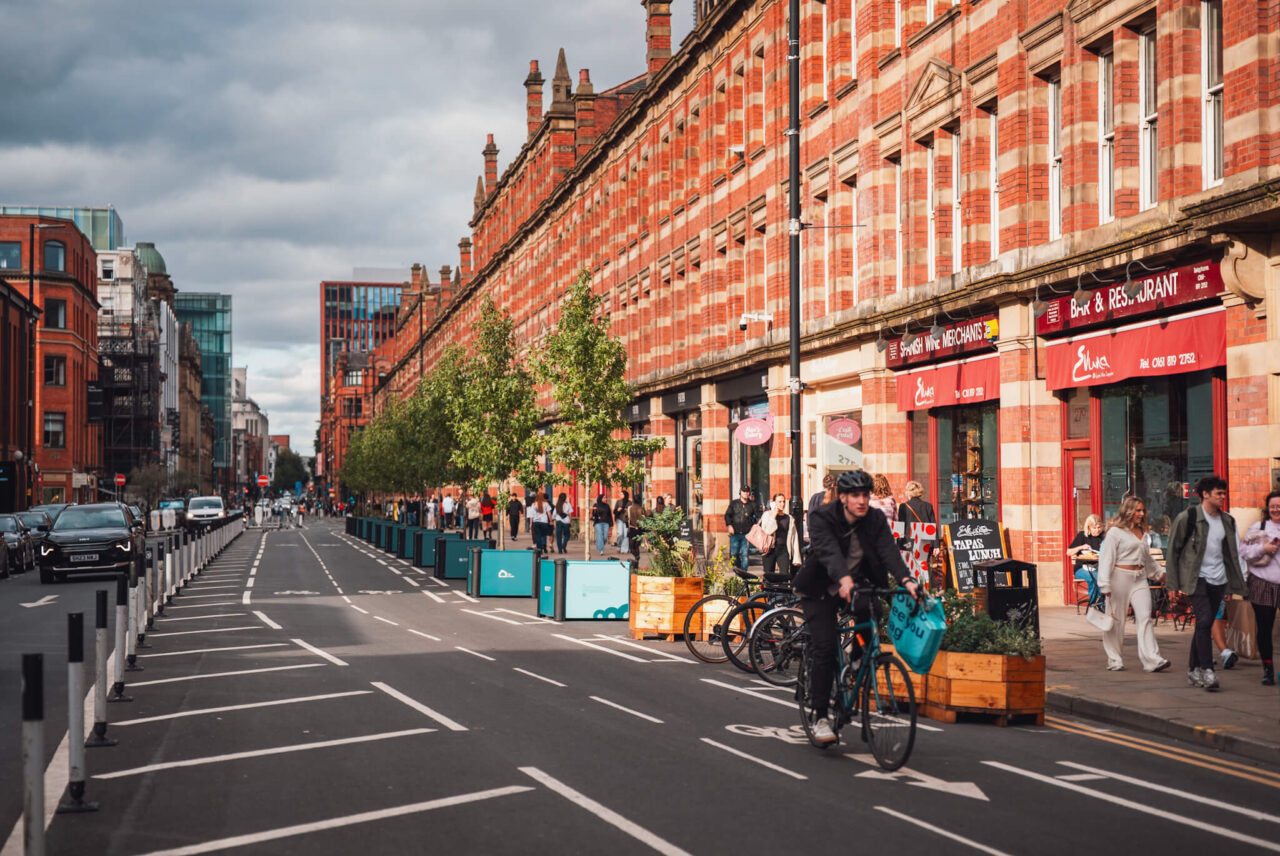
A 90 metre section of Deansgate (outside the Great Northern) is now temporary home to 12 sweet gum trees, hexagonal beehive shaped planters, featuring recycled velodrome track and two brightly coloured Bike Ports.
Working in collaboration with Manchester City Council, City of Trees, City Co and Great Northern, CyanLines has brought the trees to Deansgate to help show residents, visitors and business owners the difference the trees and plants will make to the space and they hope to encourage people to think about other possibilities to bring more nature on to our city streets.
Councillor Garry Bridges, leader, Manchester City Council said: “The city is on a mission to create more green spaces, plant more trees and encourage wildlife into the city. While this may be a temporary installation, it’s a welcome addition to one of the main roads in the city and we hope our residents, visitors and business owners will see the huge benefits trees and plants can bring to our streets. The addition of the brightly coloured cycle ports will provide much needed cycle parking to the area as more people experience the city on two wheels than ever before.
“The tree-lined section is just the start and we’ll continue to work with local residents and businesses on Deansgate, the CyanLines team and City of Trees to develop new ideas to let nature thrive and for people to enjoy.”
Steve Connor, interim programme director, CyanLines said: “We are thrilled our first pop-up project is taking place on Deansgate, just a stone’s throw from the CyanLines route, CL4. This is about delivering a more connected, greener, healthier and more climate-resilient city for the future and we hope our trees, planters and cycle posts spark imaginations, conversations and ideas.”
Mark Schofield, centre director, Great Northern said: “We welcome the trees, planters and new cycle parking along our section of Deansgate, it will really bring the space to life and show there’s plenty of potential for future projects and plans.”
The sweet gum trees will be on Deansgate in planters; however, they will be planted into forever homes around Greater Manchester when the project ends. The trees have been chosen because they thrive in the varied weather conditions experienced in Manchester and in the autumn their dark green leaves turn into striking red and gold autumn colours.
As well as creating a visual impact, trees bring many important benefits to Greater Manchester. An i-Eco Survey carried out by the City of Trees for its Urban Forest Plan (full report here.) revealed some important findings:
Beth Kelsall, Urban Forestry Manager from City of Trees “Bringing sweet gum trees on to Deansgate will really bring to life the many benefits street trees bring. The reason the trees are only in place for a limited time is we don’t like to leave them in temporary planters for too long as with all trees, they thrive much more when planted in the ground.”
The inclusion of the two Bike Ports, each capable of holding up to eight cycles, is in reaction to the popularity the Deansgate cycleway – with 1.16 million recorded users in the past year (Aug 25 to July 26) a weekly average of around 25,000 and 3,000-3,500 daily uses (Source is: C2-Cloud Traffic Data ©2003-2026 Drakewell Ltd) – which runs from Blackfriars in the north onto Chester Road in the south, connecting to the Chorlton Cycleway and forming a protected cycle route from the city centre to south Manchester, covering more than 4 miles (6.5 km).
The cycle shaped ports will be painted in Tour de France colours – one yellow and one polka dot – in anticipation of the Tour de France Femmes coming to Manchester next year with a stage finish on Deansgate.
The bee hive style planters have been made by Touch Wood, who recover wood from construction sites across Greater Manchester and upcycle into beautiful indoor and outdoor furniture while providing local employment, upskilling volunteers and creating pathways to employment. The Deansgate planters have been designed by Touch Wood incorporating the Velodrome track from Manchester Cycling Centre. By making the planters from reclaimed timber, the project has saved 1 tonne of CO2
The plants, including evergreens, hostas, lavender, juniper, thyme, sedums and cabbage palms, have been specially selected for the Deansgate project because they are hardy, cope well living in busy places and will provide seasonal colour and textures.
The installation will be in place for approximately 12 months.