News
How a Manchester hotel became Europe’s first Verified Net Zero Hotel, and what we can all learn from it
24 November 2026
Hospitality and leisure
 Get in touch
News
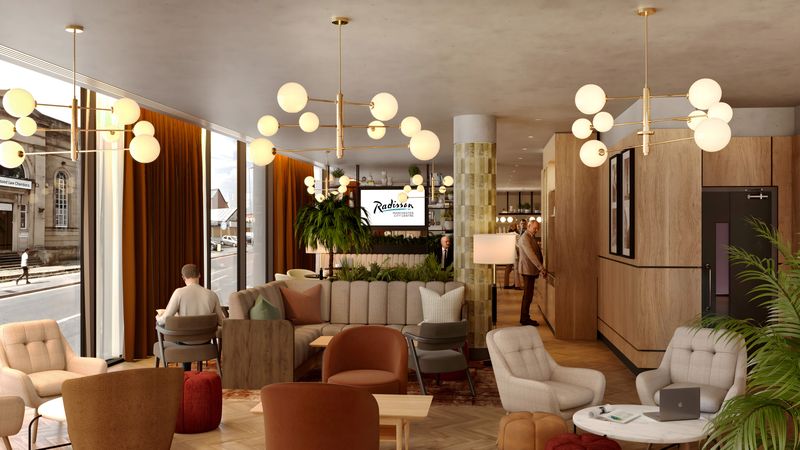
In May 2025, the former Park Inn reopened as Radisson Hotel Manchester City Centre, A Verified Net Zero Hotel. It was the first hotel of its kind to open in Europe, and Oslo followed two months later.
That’s a first for Manchester and something the whole city can be proud of. And the way they got there matters as much as the result. This wasn’t a purpose-built eco-hotel. It was an existing working four-star hotel that had to change while it stayed open.
Starting with the building you’ve got
Most of the buildings that need to reach net zero by 2050 are already standing. That’s what makes this project such a useful example for Manchester businesses.
The hotel was built in an older style, with gas running through it. To go fossil-free, the gas pipes had to come out completely. Heat pumps now supply hot water, and the kitchen runs on electric induction. The hotel buys 100% renewable electricity, so every room, meeting space, the spa and the pool run without fossil fuels.
It also meant changing how the building is managed day to day. The team had to learn new systems and a new way of running a hotel.
Getting the process right
The hotel still runs as a normal four-star hotel. Guests get the same comfort, and sustainability is built into how things are done behind the scenes. The team got the core process right:
The result is a footprint around 60% lower before any remaining emissions are removed.
Bringing the team with them
The hotel is open about the early days: there were teething problems. Staff training was about more than new rules. It helped everyone understand what the journey is and why it matters.
Housekeeping is a good example. The team changed the way rooms are cleaned. The key was keeping it as simple as possible and building it into the daily routine, so it never felt like extra work. Today, staff are proud to be part of the journey, and guests notice that.
Bringing guests along too
Guests are part of the story as well. The hotel’s stay app helps guests make lower-impact choices, and tools like [e-smile – CHECK what this does] keep the conversation going. With event organisers, the team accepts that every client is at a different point and works with them to meet their own requirements.
The business case: trust the process
Net zero is a long-term investment, and the hotel is clear that it takes trust in the process. The return comes in several ways: lower energy use, stronger appeal to corporate clients and event planners with their own carbon targets, and a reputation that’s now winning awards.
In 2026 alone, the hotel was named Sustainable Hotel of the Year at the Manchester Hoteliers’ Association Awards and won Leading Sustainability & Impact of the Year at the This is Manchester Awards. That’s on top of Green Hotel of the Year at the European Hotel Awards, an HSMAI Europe Sustainability Award, recognition at the AD Net Zero Awards, and Green Tourism, BREEAM and ECOsmart certification.
What Manchester businesses can take from it
You don’t need to be a 252-bedroom hotel to follow this example. The lessons work at any size:
Something to be proud of
Manchester currently ranks 34th in the Global Destination Sustainability (GDS) Index, with ambitions to go further. Venues like this help turn that ambition into something tangible. Combine a Net Zero venue with Manchester’s compact city centre, strong rail connections and Metrolink network. Organisers have a real opportunity to reduce the footprint of their event and delegate travel. It isn’t just event organisers taking notice. Sustainability credentials are increasingly influencing leisure travellers too, making this relevant to both business and leisure markets.