
Becoming greener: the value of sustainable accreditation programmes
- Tuesday, January 6, 2026
- Posted By The Growth Company

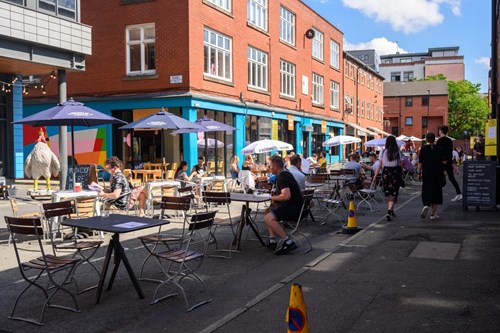
As the public’s environmental awareness increasingly affects their everyday choices, sustainability is becoming a key aspect of running a successful restaurant. Research shows that growing numbers of customers are making choices about where to eat and drink with an eye on the establishment’s sustainable criteria. And if Greater Manchester is to achieve its ambitious target of becoming a net zero region by 2038, then all businesses have a part to play in contributing to it.
With Greater Manchester taking steps towards its ambitious target of becoming a net zero region by 2038, Marketing Manchester encourages all hospitality and tourism businesses to join these efforts and play their part in this environmental revolution.
While actions such as large-scale retrofitting projects or installation of energy efficient hardware such as solar panels and heat pumps are important, smaller scale changes such as swapping to LED lighting and fitting timers, regular staff training, and changing to renewable energy tariffs are significant steps and more achievable in the short term. Changes such as these not only make your businesses greener and contribute to wider climate action goals, but they can also save your business money in the long run, as well as attracting new customers.
Sustainability can be a daunting aspect of your business to tackle, as there is so much that can be done to improve the green credentials of your business it can be hard to know where to start. This is where third party accreditation programmes can be useful.
Third party accreditation programmes offer an independent certification process where an external body evaluates and verifies a company’s environmental, social, and ethical practices against established standards. Having an independently verified accreditation can bring several advantages to your business when looking to tackle sustainability.
Many accreditation schemes offer introductory plans to help get started, with discounts often covering the first couple of years. This can help justify the initial cost of becoming accredited, alongside the business advantages outlined above. Following this initial period, the schemes will follow a yearly subscription to continue the programme.
Fees are usually based on the size of the business either in employees or revenue, on a sliding scale.
The main sustainability accreditation schemes for restaurants in the UK are B Corp and Green Tourism, both of which are recognised as being compliant with Travalyst’s certification criteria, and the Sustainable Restaurant Association with their Food Made Good Standard.
Choosing the right one for your business involves doing some research into the criteria, process, and cost, and assessing which one aligns with your sustainability objectives. It’s important that someone in your business is allocated the responsibility of liaising with the accreditation scheme and has the time to gather the sustainability information needed to get it started. If there isn’t a dedicated sustainability role in your company, then someone who has a keen interest in climate change could be ideal, or you could look to employ the services of a specialised hospitality consultant to help, such as mission:net zero.
Hospitality partners that have signed up to a sustainability accreditation programme are widely positive about the impact they have on their business.
Maray, a restaurant focusing on Mediterranean and Middle Eastern flavours with a location in Manchester city centre, has achieved the coveted three-star award from the Sustainable Restaurant Association, making it the first restaurant in the North West to receive the highest possible rating.
Harry Jones, Head of Marketing for the group, outlines the importance of the accreditation to the restaurant:
“At Maray, the Food Made Good Standard with the Sustainable Restaurant Association has been invaluable in helping us turn our sustainability ambitions into real, measurable progress. The framework gave us clarity on where we were performing well and where we needed to improve, and it’s helped us embed better habits across our sites, from sourcing and food waste to energy use and team engagement.
"Being part of a third-party accreditation programme brings accountability, expertise and momentum. It challenges you to make meaningful changes, celebrates the wins along the way, and connects you with a community of operators who are all striving to do better. For us, it’s not a tick box exercise, it’s a roadmap that continues to push our business forward.”
If your business is interested in working towards a sustainable accreditation, get in touch with Richard Walker, Marketing Manchester’s Tourism Sustainability Manager, to start the conversation.